
News
New AED Requirement Included in House NDAA FY’27
We are thrilled to announce that Lion Heart Heroes’ proposed AED mandate and report request have been included in the House Armed Services Committee Chairman’s Mark of the National Defense Authorization Act (NDAA) for Fiscal Year 2027 — a major milestone in our ongoing effort to protect service members from sudden cardiac arrest during military training.
This is the first major step in the year-long NDAA process. The provisions must still survive conference negotiations with the Senate and final passage by both chambers of Congress before it can be signed into law by the President. Here is the full text:
SEC. 736 [Log 85484] Access to Automated External Defibrillators During Military Physical Training
Briefly, this NDAA provision would require the Department of Defense to ensure AEDs are available at required military physical testing and high-intensity training events within one year of enactment.

Specifically, the bill requires:
- AED access capable of delivering a shock within 3 minutes of a sudden cardiac arrest,
- AEDs available at the training site,
- at least one person trained in CPR and AED use at each event, and
- regular AED inspection and maintenance protocols.
The DoD must also report to Congress within 180 days on the number of AEDs needed, estimated costs, and a timeline for full implementation across military installations.
Under the Directive Report Language section, they included our request for more information about the current state of AEDs across the military, a list of organized training events, the number of CPR-trained personnel, and more. See the full text here:
Enhanced Readiness for Sudden Cardiac Arrest
We would like to thank the House Armed Services Committee (HASC) Chairman and Ranking Member for their leadership and support on this important issue. We also encourage Congress to keep this provision in the NDAA as the bill moves through the legislative process.
We are deeply grateful to Madison Arcangeli of Forza DC, the HASC Military Personnel Subcommittee staff, and our assistant, Rebecca Trejo, for their hard work, guidance, and commitment to this effort. Their support has been invaluable in helping us advance this lifesaving initiative for our military community.

The Push for AEDs at Physical Training
LHHF Executive Director Laurie Finlayson and Medical Director Dr. Amy Thompson recently traveled to Washington, DC to meet with legislative staff and advocate for mandatory access to AEDs during military physical training. We have formally submitted this provision for inclusion in the FY27 NDAA.
For additional context, see Robert Billard’s Military.com article, The Push for AEDs at Every Marine Physical Training Session, which highlights Lion Heart Heroes and outlines this important effort.
Update on the NDAA FY24 ECG Screening Pilot Program
Section 547 of the FY24 National Defense Authorization Act mandates a three-year pilot program for ECG screening of military recruits, with findings due to Congress by March 2028. Since its passage, incoming freshmen at the Army, Navy, and Air Force academies have received ECG screenings each summer, continuing through 2027.
The first pilot for enlisted recruits launched in 2025 at Lackland Air Force Base, screening more than 9,000 Air Force trainees. The most recent pilot, conducted in March 2026 at Marine Corps Base Camp Pendleton, screened approximately 1,100 Marines during Marine Combat Training (MCT-West).
We look forward to Dr. Alaric Franzos presenting Project ERASE data to Congress next year, and eagerly anticipate broader implementation of ECG screening over time.
Your continued support is helping drive this life-saving progress for future service members. #Keepmilitaryheartsbeating
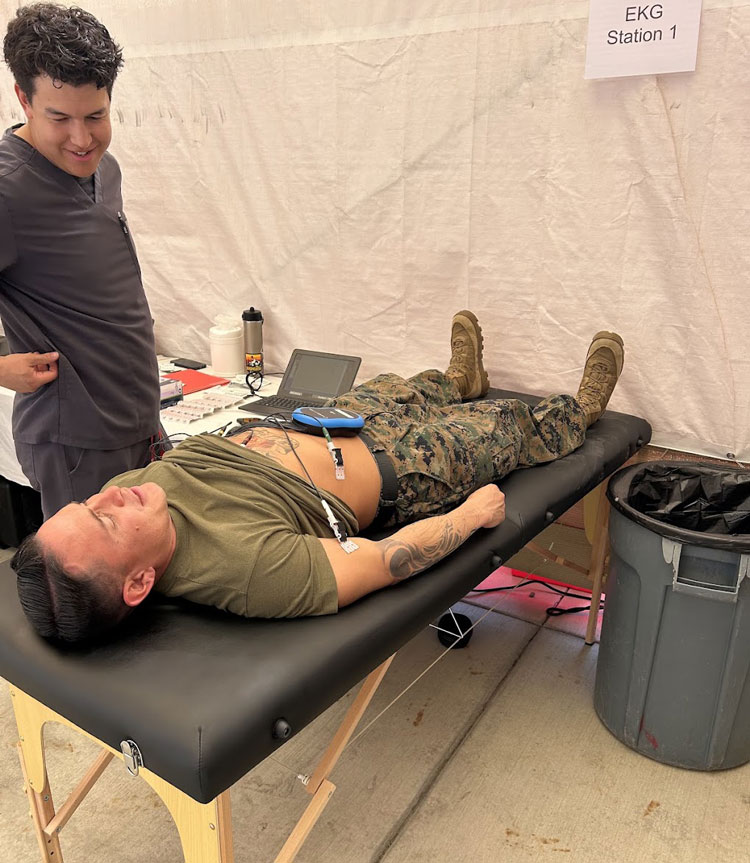
A New Kind of Donation
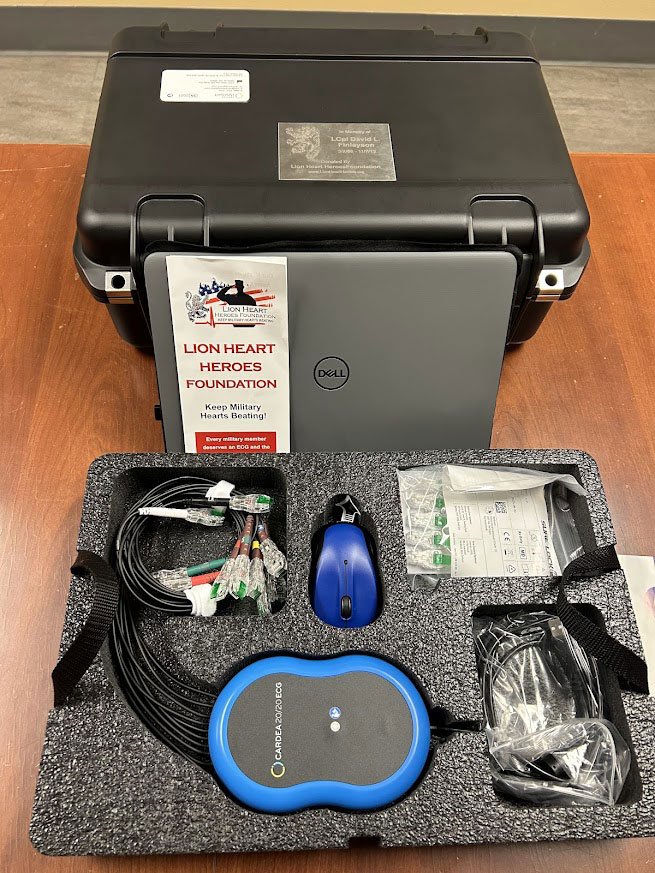
We’ve donated AEDs to various military bases around the country, but this is our first donation of a Cardea 20/20 ECG machine. It will be used for screening Recon Marines at the School of Infantry-West (SOI-W) at Camp Pendleton. The Cardea 20/20, by Cardiac Insight, enables physicians to identify cardiac abnormalities, potentially preventing Sudden Cardiac Arrest. It uses the International Criteria, an evidence-based analysis that guides ECG interpretation of the athletic heart with a false positive rate of less than 2%.